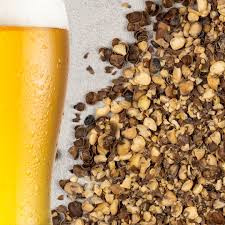
Viking Sprau Malt
0.24 €
Viking Sprau Malt
EBC: 4.0
Recommended beer styles: IPA, APA, NEIPA, hoppy beers
Extract yield: min. 81%
Usage rate: up to 15%
Country of origin: Poland
0.24 €
Points earned after purchase:
0.01 €
Details
Sprau® is a sprouted broad bean (or fodder bean) developed to improve the brewing process and the quality of the finished beer. This innovative, malted legume contributes to sustainable agriculture while offering unique brewing benefits: better yeast nutrition, more intense hop aroma and richer mouthfeel. Naturally, its high protein content aids foam formation, resulting in a stable and aesthetically pleasing beer foam. With its mild, roasty and slightly grain-forward flavour, Sprau® blends seamlessly with a variety of beer types, especially hop-forward beers like Pale Ale and IPA.
Sprau® is an excellent addition to beer recipes, especially for hop-forward styles, where it enhances hop aroma and reduces unwanted fermentation by-products. Due to its high gelatinisation temperature (80°C), the mashing process needs to be carefully planned, more on this later.
When to use it?
Sprau® is particularly useful in hop-based beers such as Pale Ale, IPA and hazy beers as it enhances hop aroma and balances bitterness. It also improves foam stability and mouthfeel, so can be useful in many types of beer, including low-alcohol beers where it improves the flavour profile.
Key features:
Hop Flavour Enhancement: Provides more intense hop flavours, ideal for IPAs and Pale Ale.
Improves foam: provides a stable beer foam thanks to its high protein content.
Enhances body and mouthfeel: Gives beer a fuller, smoother texture.
Sustainable brewing base: Supports crop rotation and nitrogen fixation, reducing fertiliser requirements.
Nutrient-rich mash: provides excellent nutrients for yeast, promoting healthy fermentation and reducing off-flavours.
Mild, roasted, grain flavour: Sprouting reduces the bitterness and astringency typical of raw broad beans, giving Sprau® a smooth, grain flavour that does not detract from the flavour profile of the beer.
How to mash?
Sprau malt has a higher gelatinisation temperature, so trickery is required.
The Sprau Malt is heated at 82 degrees in 2.5L of water for 30 minutes (the rule is to use 5x the amount of water) to allow the starch to absorb the water. Then add the rest of the mashing water. The added water will help cool it down for the next heat step. Once it has cooled and the next heat step is reached, proceed with normal mashing.
Data
Tags
Sprau,viking,malt,faba,bean
Packing Size
0,1 kg
EBC
5 alatt
Reviews
Be the first to write a review!
Related products